You may have read about a heat pump rebate, then found a different number on another website, and now you are not sure what applies to a house in Orillia this year. That confusion is normal. Programs open, change and close, and many amounts quoted online are out of date. The safe approach is to check the official sources yourself before you sign anything, and to let your house guide the choice of equipment.
This guide covers where to look, how applications usually work and what affects the cost of a heat pump in a house of about 1,500 square feet. It does not give rebate amounts. Those change, and the only figure you can rely on is the one on the program's own page on the day you apply.
Where do Orillia homeowners find the HVAC rebates on offer now?
The City of Orillia says rebate and incentive programs are available to homeowners for energy-efficient upgrades. It points to three places to find what is currently offered:
- Save on Energy, for electricity conservation programs
- Enbridge, the natural gas utility for the City of Orillia
- Natural Resources Canada's directory of energy efficiency programs, which you can search in one place
When you read a program page, look for a few plain things:
- Which equipment qualifies. Programs often set a minimum efficiency or keep a list of approved models.
- Who qualifies. Some programs depend on how the home is heated now, such as electricity, natural gas, propane or oil.
- Whether a home energy assessment is required, and whether it has to happen before the work.
- Whether the program is still taking applications, and what the deadlines are.
If two sources disagree, trust the program's own page over a news story, a forum post or a contractor's flyer.
How do I apply for a heat pump rebate in 2026?
Each program has its own process, but the general pattern is much the same. Following it in order avoids the most common disappointment: putting in equipment that turns out not to qualify.
- Read the current rules before you buy. Many programs require the steps in a set order, and a heat pump installed before you register or book an assessment may not count.
- Check whether you need an assessment. If the program needs one before the work, book it first and keep the report.
- Confirm the exact model. Ask for the indoor and outdoor model numbers in writing, then check them against the program's list yourself.
- Keep the paperwork together: the invoice, the model and serial numbers, the installation date and the installer's details.
- Submit within the deadline and keep a copy of everything you send.
If you are reading this late in 2026, check whether a program you heard about earlier in the year is still open or has been changed. If a program closes while you are still deciding, you do not need to rush into a purchase. New programs and updated terms do appear, and a well-chosen system matters more than one particular incentive.
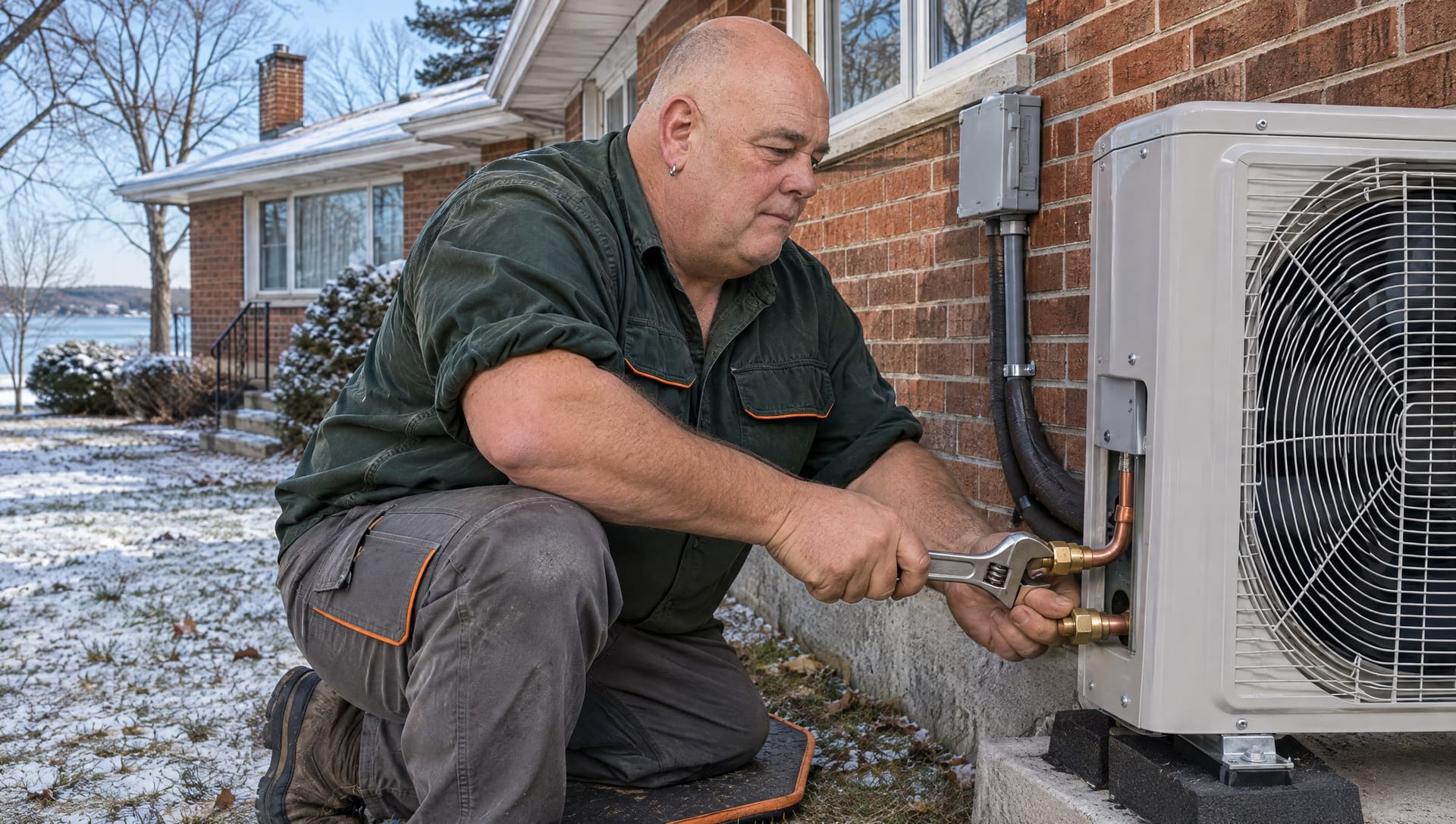
Refrigeration and air conditioning work in Ontario is a compulsory trade, and programs often ask who installed the system. At Orillia Heating, work is performed by 313A refrigeration and air conditioning mechanics.
How much does a heat pump cost in a 1,500 square-foot house?
We can't give you a fair figure without seeing the house, because two houses with the same floor area can need very different systems. What matters is how fast the house loses heat: the insulation, the windows, air leaks, the basement and how the rooms are laid out. Square footage only gives a starting point. Our guide on sizing a furnace explains the same idea for furnaces.
The things that move the price most are usually these:
- Ductwork. A ducted heat pump can often use the existing ducts if they are the right size and in good condition. If they are not, the ducts need work, or a ductless system may suit better.
- Cold-climate or standard equipment. Cold-climate heat pumps are designed to keep heating through a Canadian winter. They are built differently and priced differently.
- Hybrid or all-electric. A hybrid system pairs a heat pump with a gas furnace. The heat pump does most of the work, and the furnace takes over on the coldest nights.
- Electrical capacity. Some older panels need an upgrade before a heat pump can be added.
- Number of indoor units. In a ductless system, each room or zone may need its own head.
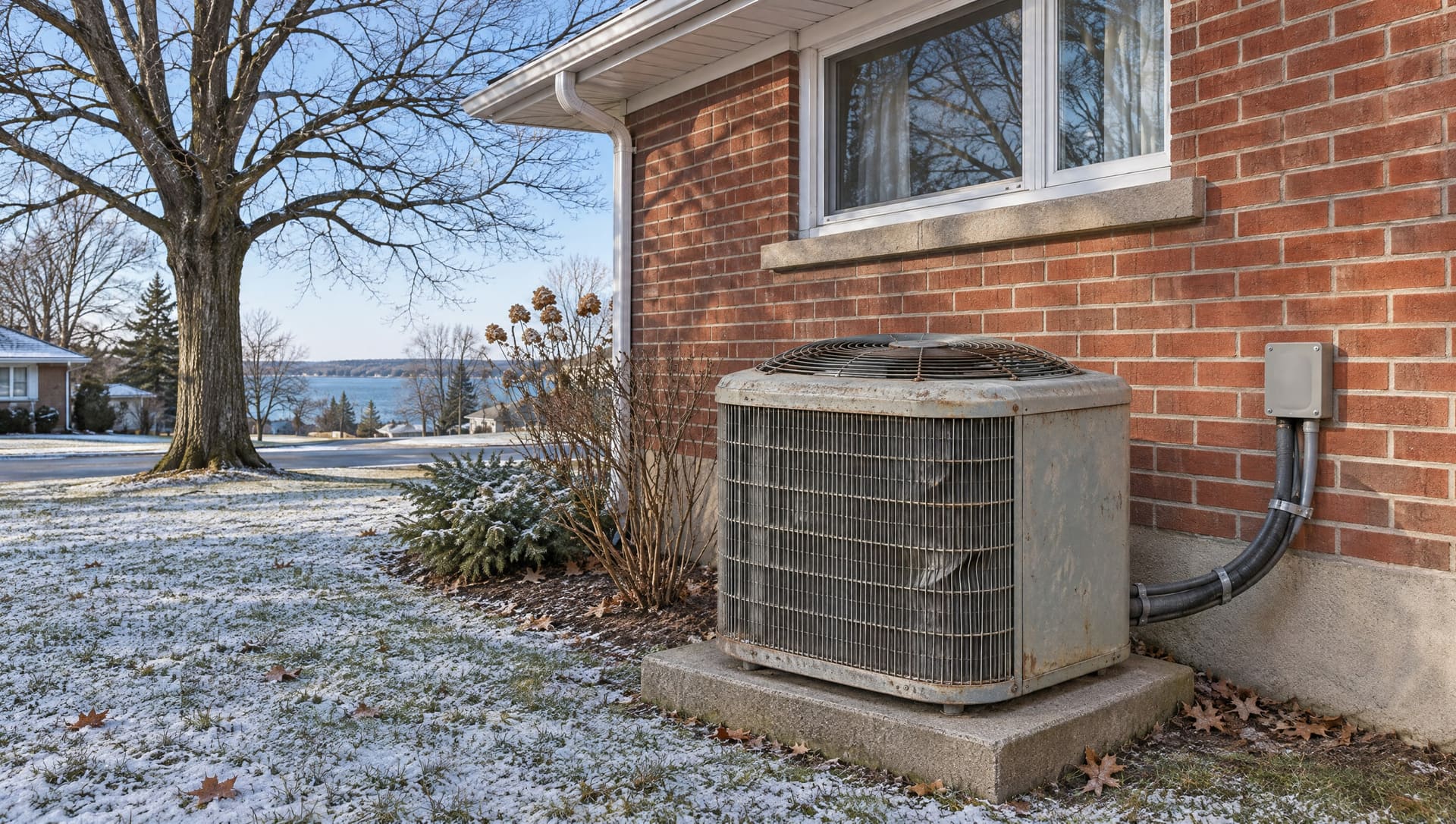
- Outdoor unit placement. The unit needs to sit clear of drifting snow and roof runoff, which can mean a stand or a bracket.
- Removing old equipment, such as an old boiler, an old air conditioner or a leftover oil tank.
A rebate can cover part of the total. Treat it as a reduction in price, and choose the system on how well it suits the house.
What does your kind of Orillia house usually need?
Much of Orillia is older housing. The 2021 Census counts 14,425 occupied private dwellings in the city. Of those, 4,510 were built in 1960 or before and another 3,855 between 1961 and 1980, which together is more than half of the city's homes. The age of the house often tells you which kind of heat pump makes sense.
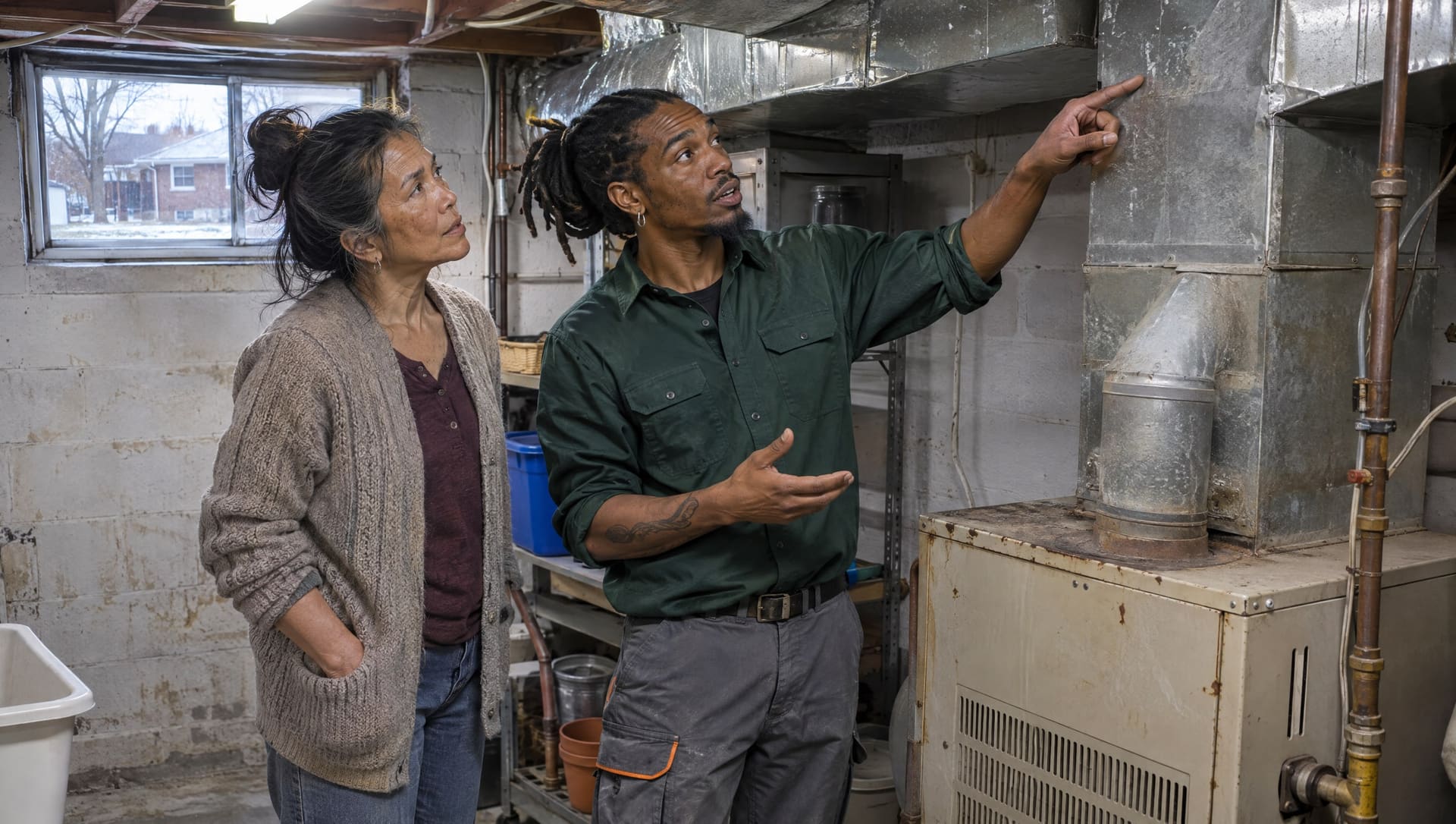
**Older homes on Mary Street, Mississaga Street West and Laclie Street.** Some of Orillia's oldest houses date from around 1875. Houses of this age were built for stoves and coal, and many were later given hot-water boilers and radiators. A technician often finds no ductwork for central air, or duct runs that are too small. In these homes a ductless heat pump is often the practical route, and it can heat and cool without opening walls for new ducts.
**Wartime and 1950s homes around Westmount Drive, Argyle Street and Albany Street.** These houses usually began with a gravity or early forced-air furnace burning coal or oil, later converted to gas. The ductwork tends to be small and sparse, with weak airflow to the upper half-storey. A ducted heat pump may need some duct changes, and sometimes a ductless head upstairs is the simplest fix. An old oil tank may still be in the basement.
**West Ridge and West Orillia, built from 1998 on.** These homes were built with forced-air gas furnaces and ducting for central air. A ducted or hybrid heat pump usually fits the existing system well. If the builder's original furnace or air conditioner is near the end of its life, this can be a good moment to look at both together.
How does Orillia's winter affect the choice?
Environment Canada gives Orillia's mid-November normals as a high of 5°C and a low of -3°C, so nights are normally below freezing well before December and the heating season is long. A cold-climate heat pump is designed for those conditions. A hybrid system adds a gas furnace as backup for the deepest cold, which many homeowners find reassuring. Whichever you choose, keep the outdoor unit clear of snow through the winter.
Any work on the gas side of a hybrid system is performed by TSSA-certified gas technicians.
What if you are north of the city?
Washago and the surrounding areas of the Township of Severn have been beyond the gas main. On July 21, 2026, the Ontario Energy Board approved an Enbridge project of about 22 kilometres of pipeline. It will connect about 473 homes and businesses that do not have natural gas now, with service planned to start in the 2027/2028 heating season. If you live there, check which programs apply to the fuel you use today, and think about whether a hybrid system will make sense once gas arrives.
What should you ask for before you decide?
- A written price that lists the equipment, any duct changes and any electrical work separately
- Model numbers you can check against the program's list
- Sizing based on how much heat your house loses, not on the old unit's label
- The programs the quote assumes, which you then confirm yourself on the official pages
If you are thinking about a heat pump for your house, see how Orillia Heating sizes and prices heat pumps.